
The Wake Forest University Department of Anthropology promotes understanding and appreciation of human cultural and biological diversity. Through academic courses, scholarly and applied research, and public service, the Department of Anthropology provides the Wake Forest community with the tools and knowledge necessary for global citizenship. Composed of scholars representing all sub-fields of anthropology, the Department of Anthropology serves as the premier academic and practical resource for multicultural awareness and education in the University and Winston-Salem communities, enhancing the University’s commitment to Pro Humanitate.


Department of Anthropology News
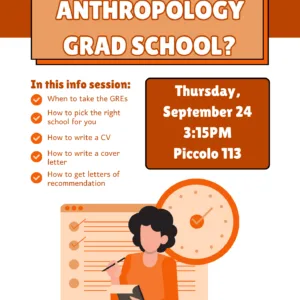
- Dr. Gitzen – Interested in Anthropology Grad School?
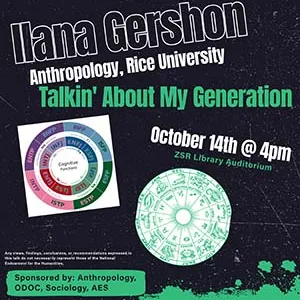
- How to be Human Speaker Series: Dr. Ilana Gershon
- Faculty Reflections – Steve Folmar
Digital Ethnography as a Way of Knowing: A Conversation with Sarah Pink
Sarah Pink is an award-winning design and futures anthropologist and documentary filmmaker whose work is internationally influential, both within and beyond academia. Sarah is an Australian Research Council Laureate Professor and holds honorary doctorates from Malmo and Halmstad Universities in Sweden. Pink is currently Professor and Director of FUTURES Hub and the Emerging Technologies Research Lab at Monash, where she engages and innovates interdisciplinary and international research approaches to offer fresh perspectives and realistic future visions and foresight about the role of human futures in shaping digital and net zero transitions.
31 October 2026, 5 pm IST …
0 CommentsComment on Facebook
Check out our Spring 2027 upper level classes! …
0 CommentsComment on Facebook
Join us for a Pizza Party in the Anthropology Department on Thursday, Oct. 15! …
0 CommentsComment on Facebook
Welcome Dr. Adela Zhang! …
0 CommentsComment on Facebook
Wondering why one should major in Anthropology? Read on: …
Want to Succeed in an AI World? Study Anthropology
www.wsj.com
College students and workers alike are finding a new set of skills is needed for a rapidly changing workplace.1 CommentsComment on Facebook
Please join us this Friday! …
0 CommentsComment on Facebook
We are excited to share this interview with Dr. Steve Folmar. …
3 CommentsComment on Facebook
Check out this WFU News interview with our own Dr. Sherri Lawson Clark about how the ROAD Housing Act will reshape federal housing programs. …
The ROAD Act will shield America’s most vulnerable families | Wake Forest News
news.wfu.edu
Following bipartisan passage in the House and Senate, the ROAD Act is poised to become the most significant piece of federal housing legislation in decades.0 CommentsComment on Facebook
Join us in recognizing and celebrating the retirement and Emeritus status of our esteemed colleague, Dr. Steve Folmar @folmarfoundation Steve Folmar
Check out Dr. Clark's feature about Steve and the impact he has had on students and the department: college.wfu.edu/college-news/teacher-scholar-legacies/teacher-scholar-legacies-steve-folmar/
"As Steve Folmar transitions to Emeritus status, the Department of Anthropology reflects on a career defined not just by academic excellence, but by a radical commitment to service. To know Steve is to know a scholar who views the world not as a laboratory, but as a community of interconnected lives.
While Steve’s CV is decorated with NSF-funded research and leadership roles, his colleagues often point to his character during moments of quiet necessity as his true hallmark."
Thank you, Steve, for all that you've done for our students and the department! Feel free to share more memories and thoughts below, and we'll pass them along!
#retirement #emeritus #wfuanthropology
@wfuniversity @folmarfoundation …
5 CommentsComment on Facebook